Autism Dietitian: Sensory-Friendly Nutrition for Autistic Adults
Support from an autistic registered dietitian for sensory-driven eating, safe foods and autistic burnout. No forced foods. No shame. Just care that respects how your brain works.

A Registered Dietitian for Autistic Adults Who Actually Gets It.
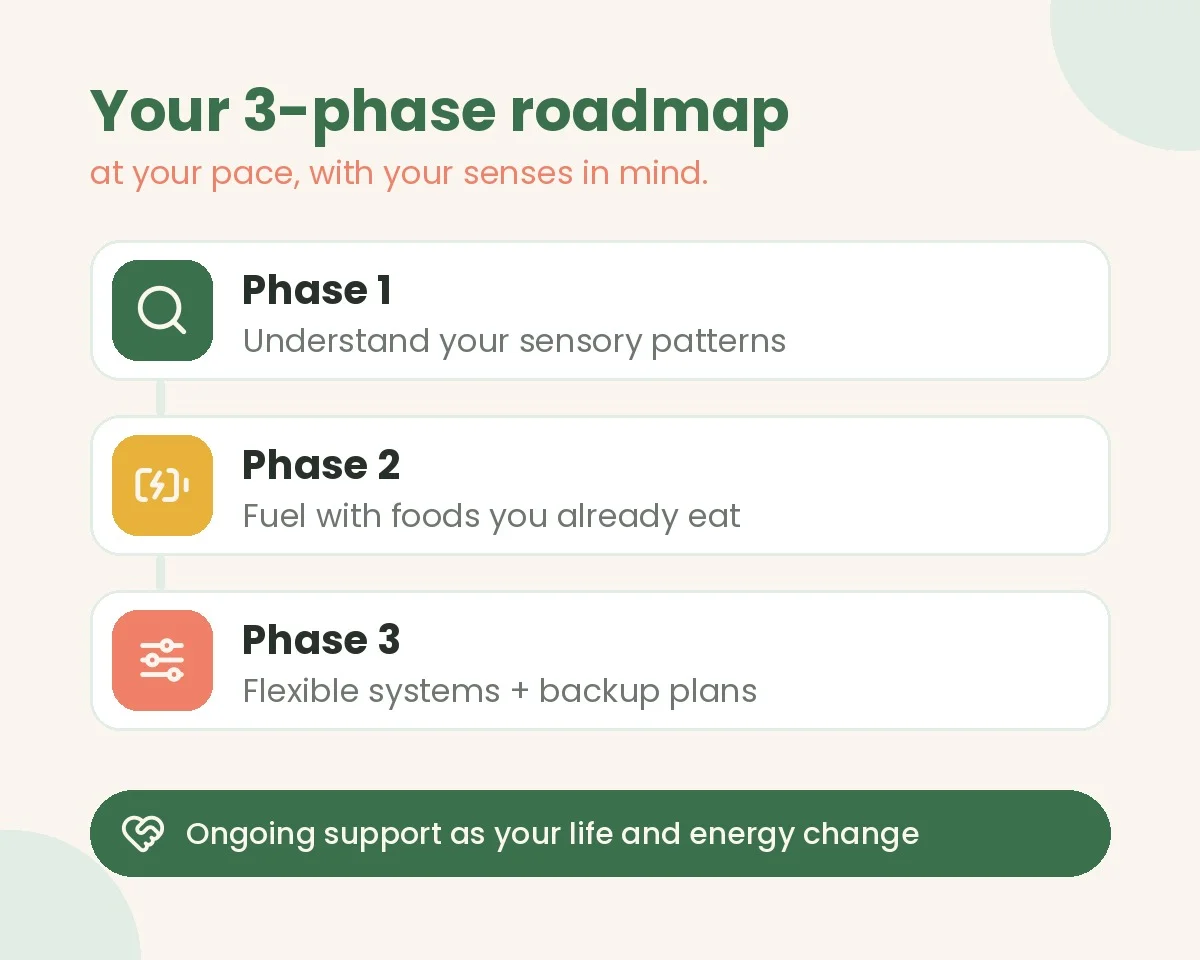
My 3 Phase Approach as an Autism Dietitian
Think of it like building a house. We start with a steady foundation, then add the pieces that make it feel like home. Each phase moves at your pace, so you never have to change everything at once.
🔍 Phase 1: Understand your sensory patterns
🔋 Phase 2: Fuel your body with foods you already eat
🧩 Phase 3: Create flexible systems with backup plans
Sensory-Driven Eating in Autistic Adults
For many autistic adults, eating is a sensory experience first. Texture, smell, temperature and even a brand change can make a food feel safe or impossible. Think of your senses like a volume knob. For some people, the volume on food is turned way up. A texture that seems mild to others can feel overwhelming. That's not being "picky." It's sensory-driven eating.
✅ We start with foods that already feel safe
✅ Your sensory preferences and routines are respected
✅ Nutrition gaps are filled gently, at your pace

Your Safe Foods Are Allowed
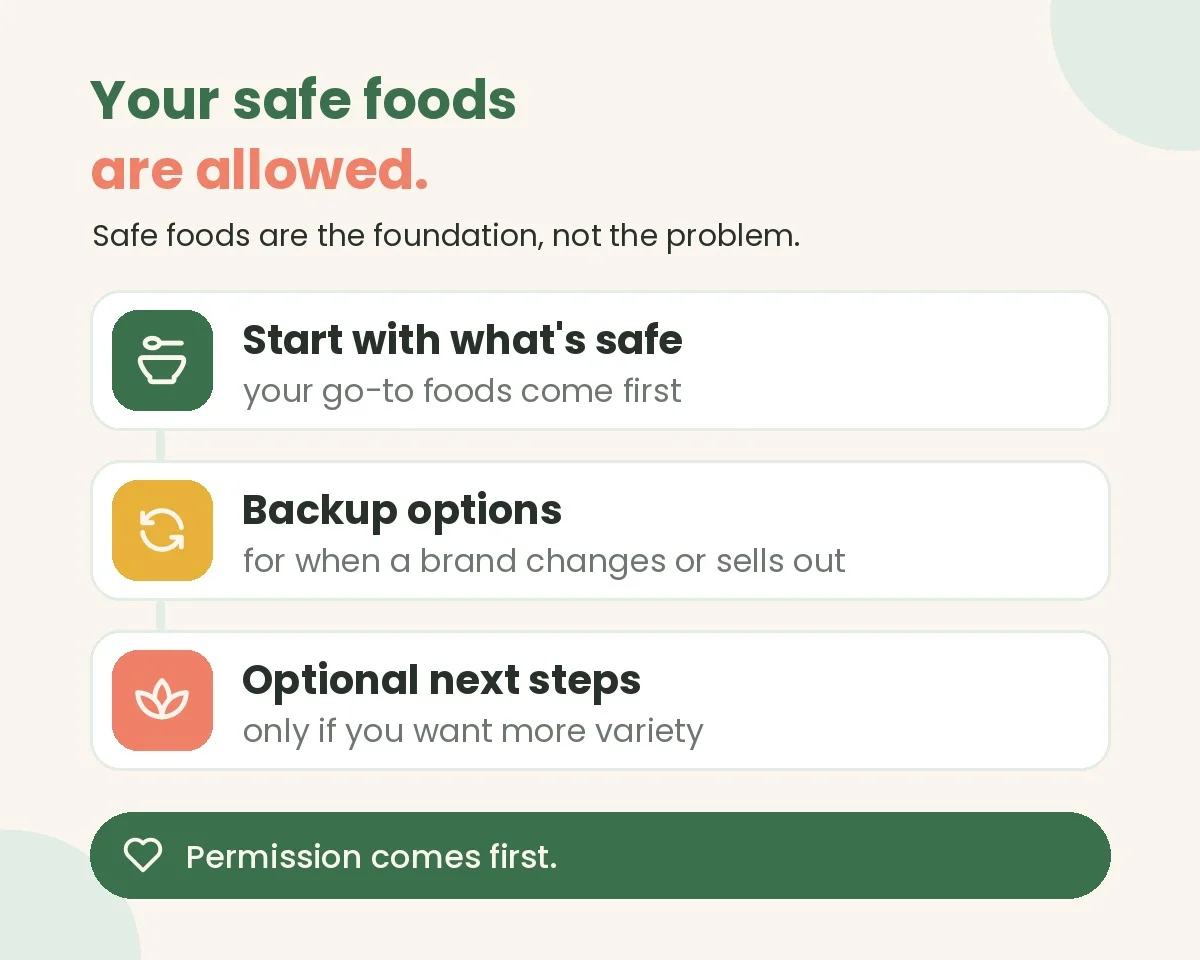
Safe foods are the foods your body trusts. They help you eat when everything else feels like too much. Many autistic adults have been told their safe foods are "the problem." In my work, safe foods are the foundation. Gentle reminder: permission comes first. Variety is never forced, and it's only a goal if you want it to be.
✅ We build your plan around foods you already eat
✅ Simple backups for when a safe food changes or sells out
✅ Gentle, optional steps if you'd like to expand
Hunger Cues and Interoception
Interoception is your body's ability to send signals like hunger and fullness. For many autistic people, those signals are quiet, mixed up or easy to miss.
✅ Eating rhythms that don't rely on hunger cues
✅ Gentle ways to notice body signals
✅ Reminders that work with your routines

Autistic Burnout and Eating
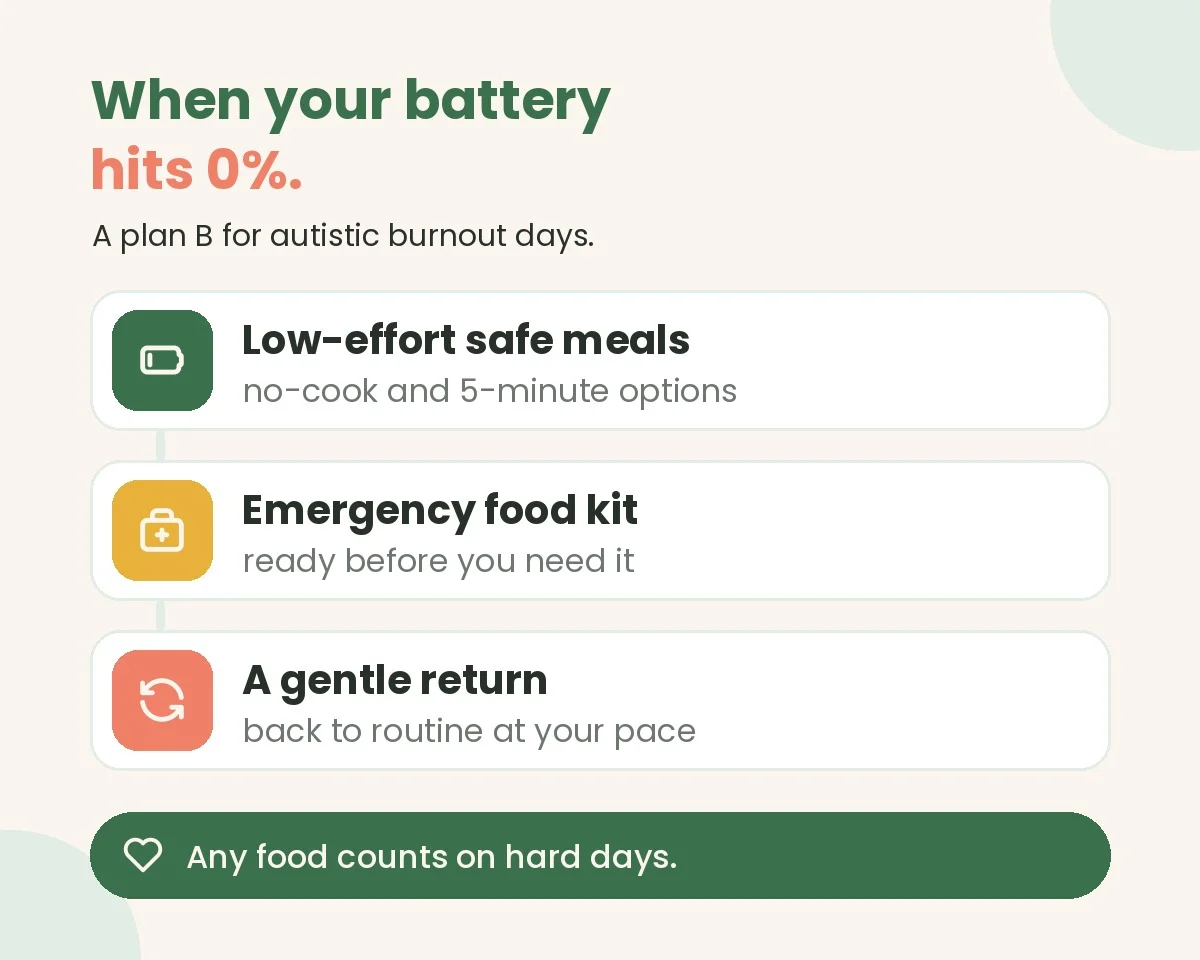
During autistic burnout, eating can be one of the first things to slip. Cooking, deciding and even chewing can take more energy than you have.
✅ Low-effort safe meals for burnout days
✅ An emergency food kit for when your battery is at 0%
✅ Ways to get back into your routine gently
Masking and Eating Around Others
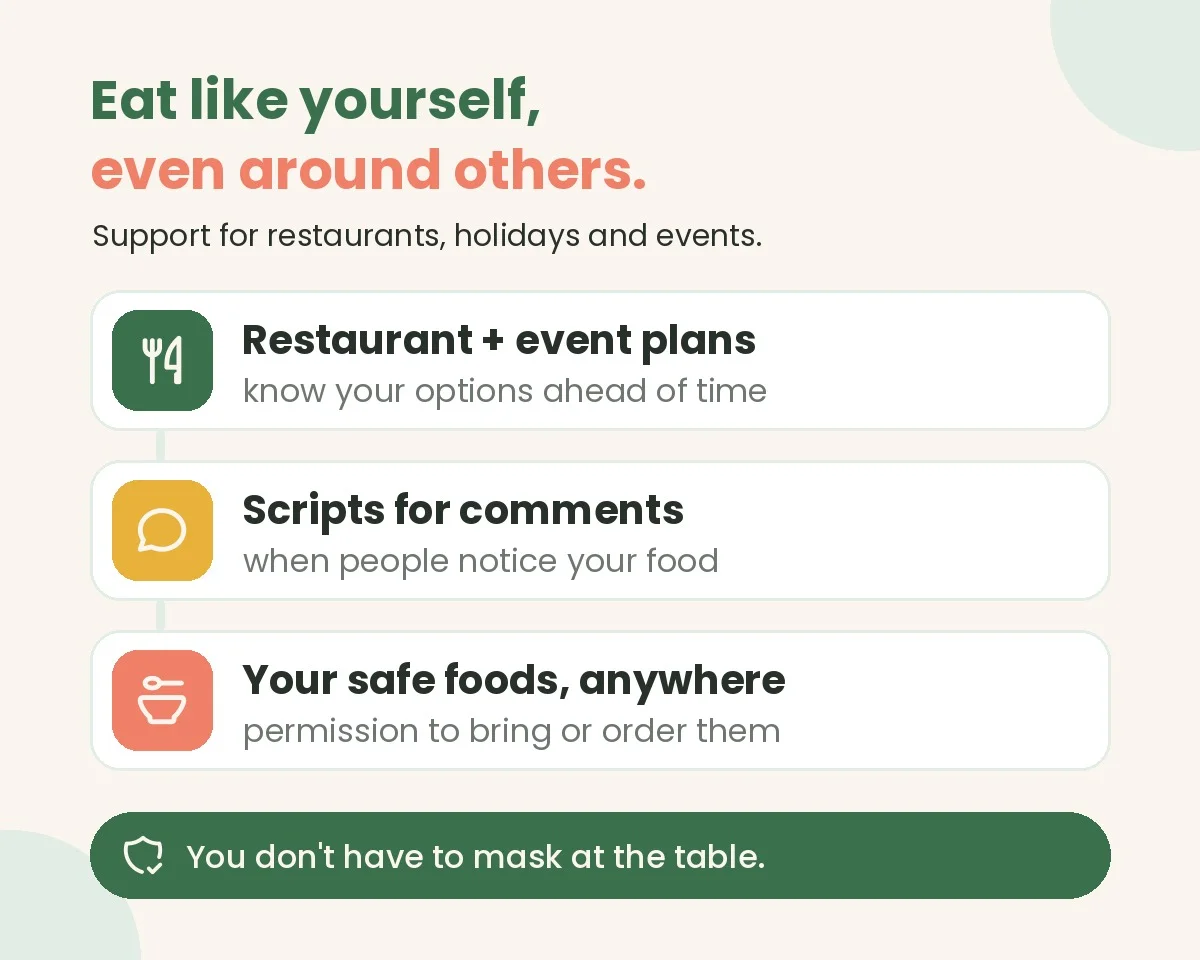
Eating in front of people can be stressful. Restaurants, holidays, dates and work events can all bring pressure to eat "normally."
✅ Plans for restaurants, holidays and events
✅ Scripts for when people comment on your food
✅ Permission to bring or order your safe foods
What Working With an Autism Dietitian Looks Like
🔍 First session: We talk about what eating looks like now. No food logs and no judgment.
🔋 Next few sessions: We pick one small, doable change.
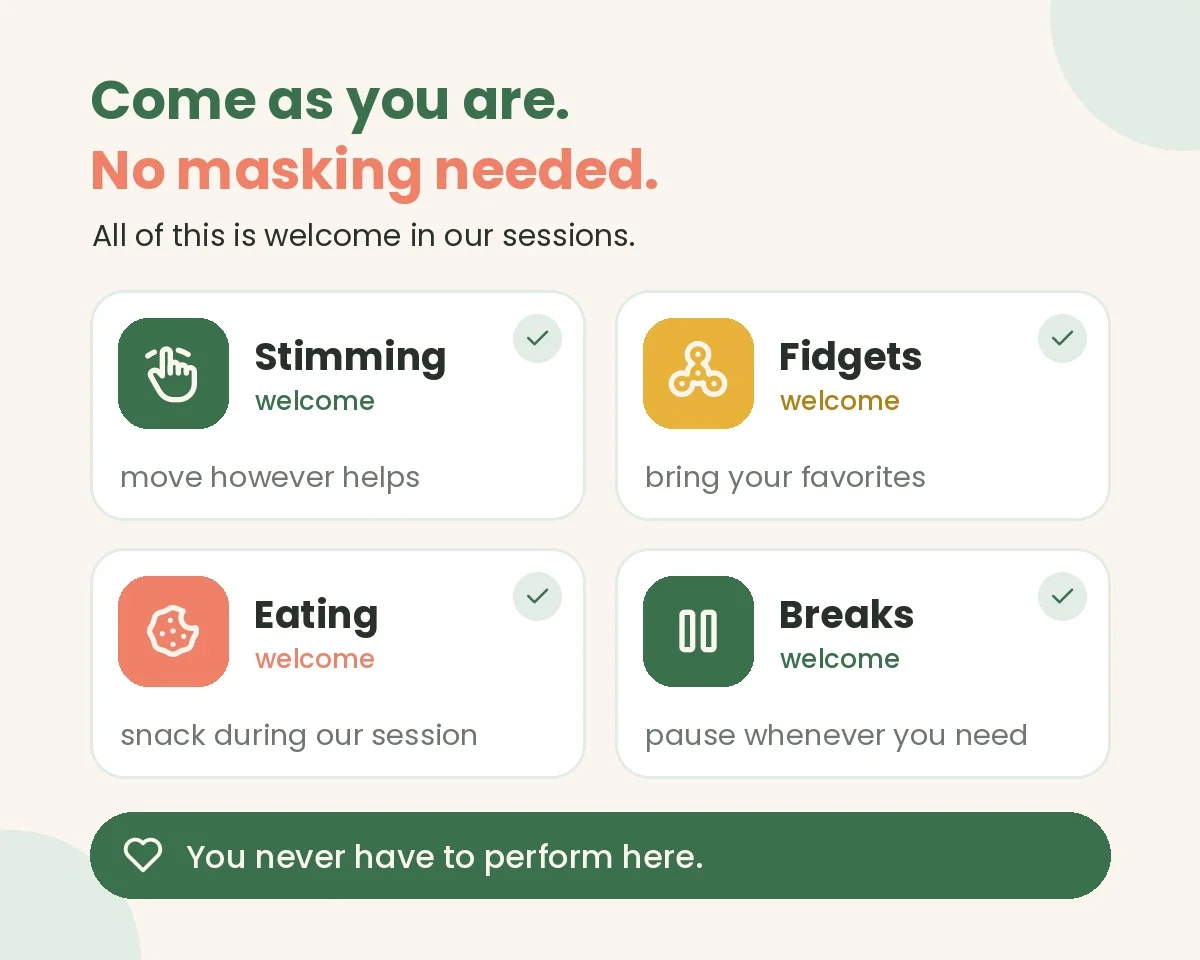
🧩 Ongoing: We build flexible systems with backup plans. All sessions are virtual, so you can join from your own space.
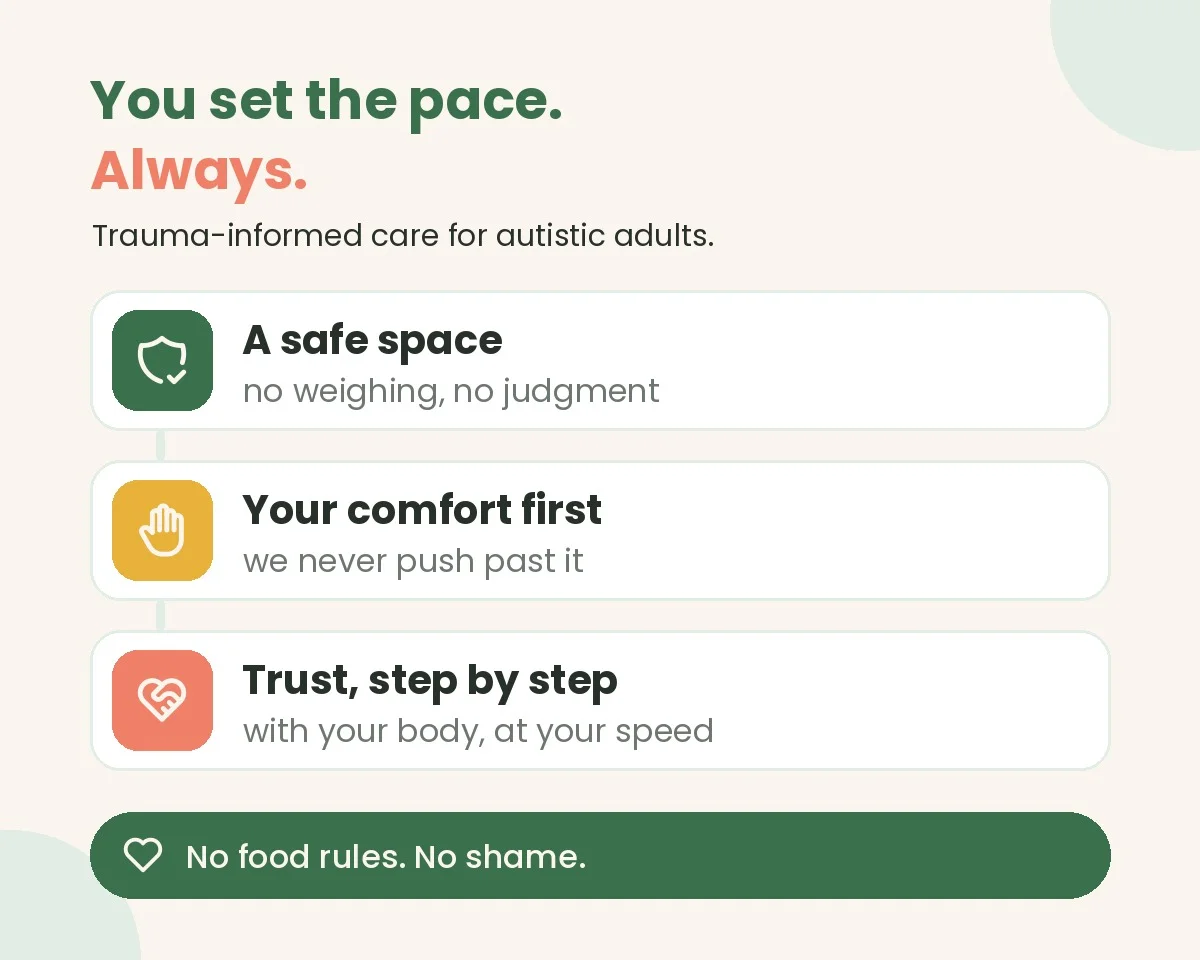
Trauma-Informed Nutrition for Autistic Adults
Many autistic people have been misdiagnosed, dismissed or pushed into food rules that didn't fit. Years of masking can make it hard to trust your body, or the people trying to help.
✅ You set the pace, and we never push past your comfort
✅ No weighing, food rules or judgment
✅ We build trust with your body step by step
"…If you are neurodivergent, Kaitlyn is a godsend."
Questions About Working With an Autism Dietitian?
- Do you work with autistic adults?
Yes. Sensory-friendly care for autistic adults is at the heart of my work. I'm autistic too.
- Will you make me try new foods?
No. Your safe foods are welcome, and no one forces new foods. If you want to expand, we go in small, optional steps.
- What's the difference between sensory-driven eating and ARFID?
Sensory-driven eating is a spectrum. ARFID is the more challenging end, where eating affects your health, energy or daily life. I support both.
- Do I need an autism diagnosis?
Absolutely not. Many of my clients are self-identified or were diagnosed later in life. If food feels hard, we can start there.
- Can a dietitian help with autistic burnout?
Yes. We build low-effort plans and backup meals, so eating still happens when your energy is low.
- Does insurance cover an autism dietitian?
Often, yes. I'm in-network with Aetna, BCBS, Cigna and UnitedHealthcare. Most of my clients pay $0.
- How do I find an autism-friendly dietitian near me?
You don't have to find someone local. I offer virtual sessions in 27 states, so you can meet from the comfort of home.
Nutrition Support That Respects Your Senses
Let's lean into what already feels safe for you. Most clients pay $0 with insurance and start within 1–2 weeks.