Eating Disorder Dietitian Online for Adults
Weight-neutral, neurodivergent-affirming support for anorexia, bulimia, binge eating, ARFID and OSFED. Recovery at your pace, with no scales, rules or shame.
Kaitlyn Ashner, RDN · 4.99 stars from 700+ reviews · Virtual in 27 states · Most in-network clients pay $0 · Start in 1–2 weeks
Booking happens on Nourish, the telehealth clinic I see clients through.
Online Eating Disorder Dietitian Support, at Your Pace.
⏱️ Read This in 30 Seconds
🧠 Eating disorder dietitian for neurodivergent adults, virtual in 27 states.
🌱 Weight-neutral. No scales, rules or shame.
🤝 I coordinate with your therapist and care team.
💚 Most in-network clients pay $0. 55-minute sessions.
Living with disordered eating or chronic dieting can feel like a full-time job that you never applied for.
You might be here because:
✅ You're neurodivergent, and ED treatment never seemed to fit your brain
✅ You are exhausted by the "mental math" of counting calories, macros, or points
✅ You feel trapped in a cycle of restricting food and then feeling out of control
✅ You are navigating sensory sensitivities that make "standard" nutrition advice feel impossible
✅ You have been told that your weight is the problem, instead of looking at your whole health, at any size
"She is fantastic at working with me to determine and set my own goals without trying to lead me in any particular direction."
— Nourish client
🆘 In crisis? Call or text 988, or text HOME to 741741. For eating disorder support, contact the National Alliance for Eating Disorders at (866) 662-1235.
Eating Disorder Care Built for Neurodivergent Brains
As an autistic, ADHD dietitian, I know standard ED treatment doesn't always fit our brains. We start with your safe foods, respect your sensory needs and build low-spoon routines that work with your executive function. Recovery moves at your pace, with no scales, rules or shame.
Looking for a neurodivergent dietitian for ADHD or autism? Start here.
📚 Research agrees: autistic women with eating disorders often face more complex symptoms, like sensory-related eating struggles and mealtime rigidity, and may benefit from autism-informed care. Read the study (Nutrients, 2025)

Eating Disorders I Support
I support adults with anorexia, bulimia, binge eating disorder, ARFID, OSFED, and disordered eating or chronic dieting. You don't need a formal diagnosis to start. My care is weight-inclusive and grounded in Health At Every Size, so recovery is about reconnecting with your body, not willpower.
Binge eating: Long gaps without food and strict food rules can feed the cycle. How I help: steady, regular fuel and supportive structure instead of rules, with no shame.
Anorexia: Restricting food, fear of eating enough, or rigid food rules. How I help: we build steady, adequate eating from your safe foods, at your pace, alongside your therapist and medical team.
Bulimia: Cycles of eating and then trying to make up for it. How I help: steady meals that ease the cycle, shame-free, coordinated with your therapist.
ARFID: A short food list driven by sensory needs, fear or low interest. How I help: we start with the foods your senses already trust. Learn more on my ARFID page.
OSFED and disordered eating: Your struggle counts, even if it doesn't fit a label. How I help: we start where food feels hardest.
📖 Related reads: Eating Disorder Recovery for Neurodivergent Adults · ARFID Safe Foods List · ARFID Self-Check · ARFID in Adults
🪜 How recovery works with me
Step 1: Map your safe foods and what eating looks like right now. All of them count.
Step 2: Build steady eating with the foods you already trust. Safe foods support recovery and refeeding.
Step 3: Gently explore new or harder foods, only if and when you're ready.
The goal is food freedom and flexibility, at your pace.
👅 Sensory need or ED fear?
Some foods are hard because of texture, smell or taste. That can be different from fear driven by an eating disorder. We look at why a food is avoided, together.
What do you feel when you think about this food? Helps tell fear apart from sensory discomfort.
Is it the texture, smell or taste? Points to a sensory need.
Has this food ever felt safe? Shows whether it's a lost safe food.
What would help you try it? Shows your readiness. We go at your pace.
💡 Neither one is a character flaw. Both get care that fits.
🥄 Low-spoon supports for recovery
Feeding yourself several times a day takes planning, starting and finishing. These supports lighten that load.
Convenience foods: a foundation, not a shortcut. What matters most is that you eat.
Visual plans: less to remember about what to eat.
Body doubling: eating alongside someone, in person or on a call, can make starting easier.
Mix-and-match meals: simple meals from items you already like.
Meal kits or meal services: planning and shopping off your plate.
Your Care Team
You deserve a team that talks to each other. With your permission, I coordinate with your therapist, doctor and psychiatrist so everyone is on the same page. If you ever need more support than outpatient sessions, I'll help you find the right level of care, whether that's IOP, PHP or residential.
🤝 Therapists and treatment teams: you can refer a client directly. Refer a client → or see For Providers.
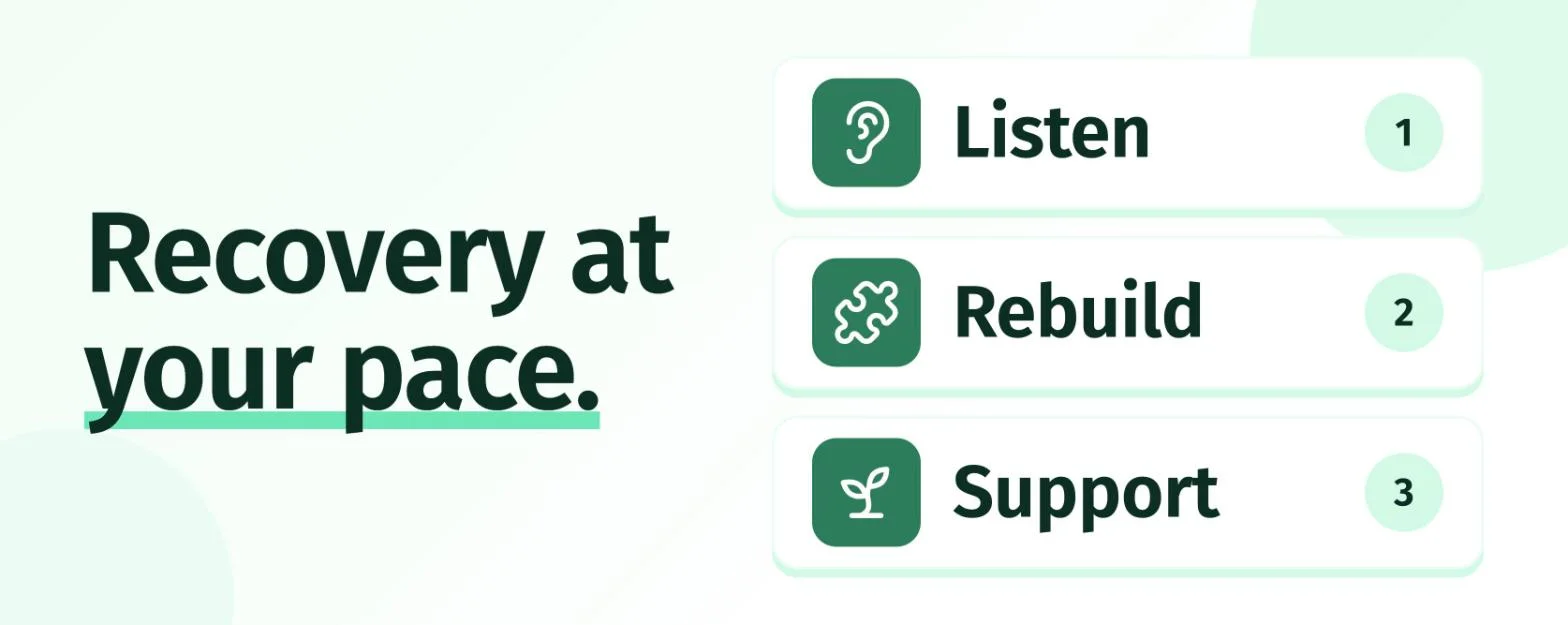
Recovery at your pace
What Clients Say.
Recovery takes trust. Here's what clients say about feeling safe, seen and heard.
"She was knowledgeable, not judgemental, had a plan to work for to help, offered proactive suggestions, and most importantly I felt heard and safe."
— Nourish client"I felt heard and I feel like she understood that this is more than just food and I need to dive into why my food relationship is skewed."
— Nourish client"As a neurodivergent lady, I felt SEEN regarding my food habits. It's something I feel anxious about explaining to people because I feel like I should have my nutrition down by now."
— Nourish client"She was creative in helping patients to create and achieve treatment goals while meeting them where they were."
— LCSW and former VA colleague- Meet Your Eating Disorder Dietitian
Hi, I'm Kaitlyn Ashner, RDN, LD. I'm autistic and have ADHD, dyslexia and OCD, so I understand from the inside why eating can feel so complicated. I previously served on a VA eating disorder treatment team, and I've spent nearly a decade in nutrition and dietetics, supporting neurodivergent adults with eating disorders, ARFID and complex conditions. My care is weight-neutral, LGBTQIA+ affirming and always at your pace. Want the bigger picture? See how I work as a neurodivergent dietitian across all my specialties.
- What to Expect in Eating Disorder Nutrition Sessions
Your first session is about being heard, not having the right answers. You'll leave with one or two small, doable next steps. No generic meal plan, and no homework that needs a neurotypical level of energy.
Sessions are 55 minutes, all from home
Frequency for sessions is every 1–2 weeks to start, or up to twice a week if you're stepping down from PHP or IOP
Sessions are 100% virtual via Nourish
🍽️ Coming from a treatment program with a meal plan? Bring it. I'll work with it and your treatment team, and we'll adjust it together over time.
This is for you if…
You're an adult (18+) with an eating disorder, ARFID or disordered eating, diagnosed or not
Standard ED treatment never quite fit your brain
You want recovery at your pace, with a team that talks to each other
This isn't the right fit if…
You need more support than outpatient care can give right now (I'll help you find the right level of care)
Your main goal is weight loss
You're looking for care for a child (I'm happy to share a trusted pediatric colleague)
- What Life Can Look Like
What I hope for you:
🧮 Mental math at every meal → food without the counting
🔁 Restricting, then feeling out of control → steady meals guided by hunger, fullness and pleasure
🧩 Treatment that never fit your brain → care built around your sensory needs and spoons
"The work I've done with Nourish and Kaitlyn has helped me make big strides… I don't have to be all or nothing. Little changes are better than no change."
— Nourish client- Eating Disorder Dietitian FAQs
Do I need an eating disorder diagnosis to work with you?
No. Many of my clients have never been formally diagnosed. If food feels stressful, restrictive or out of control, you're welcome here.
Will you weigh me or talk about my weight?
Weight is never how I measure your health or progress. We focus on how you feel, your energy and your relationship with food. If your medical team needs weight information, we'll decide together how to handle it safely.
Can you work with my therapist or treatment team?
Yes. With your permission, I coordinate with therapists, doctors and psychiatrists. Warm handoffs are welcome, and I'm happy to share notes so your whole team is on the same page.
What if I need more support than outpatient sessions?
I'll help you find it. If you need a higher level of care like IOP, PHP or residential, I'll help you explore options and connect with the right support. Stepping down from PHP or IOP? We can meet up to twice a week while you settle in.
I'm autistic or ADHD. How is your approach different?
We start with your safe foods and sensory needs, not a generic meal plan. I build low-spoon routines around your executive function, so recovery works with your brain instead of against it.
Is eating disorder nutrition therapy covered by insurance?
Often, yes. I accept Aetna, BCBS, Cigna and UnitedHealthcare, and most clients pay $0. You won't be charged if your claim is denied. Self-pay is $145 per session.
Is an eating disorder dietitian covered by insurance?
Often, yes. I'm in-network with Aetna, BCBS, Cigna and UnitedHealthcare, and most clients pay $0.
Can I keep my safe foods in recovery?
Yes. Safe foods are part of recovery, with gentle exploration over time, at your pace.
How do you tell a sensory need from ED fear?
We explore why a food is avoided, together, at your pace. Texture, smell or taste points to a sensory need.
Do you help with binge eating?
Yes. We start with steady, regular fuel and replace food rules with supportive structure, using shame-free, weight-neutral care.
Page reviewed and updated November 21, 2026 by Kaitlyn Ashner, RDN, LD.
- No Surprises
💳 Most clients pay $0 with Aetna, BCBS, Cigna or UnitedHealthcare. HSA/FSA welcome. See insurance details →
🎁 Not ready to book yet? Get my 7 free low-spoon guides: a staples list, salty snacks for POTS, an eat-reminder checklist, a safe foods map, a sensory food profile, a Preparing for HRT checklist and a fridge starter. Get the free guides →
You don't need the right words. Showing up is enough.
Most Clients Pay $0 With Insurance
Most clients pay $0 with insurance | Aetna, BCBS, Cigna & UnitedHealthcare accepted | Not charged if your claim is denied | HSA/FSA eligible