You Don't Need Another Diet. You Need Support That Gets It.
Living with POTS, EDS or MCAS can make food feel like one more overwhelming demand. You know nourishment matters, but complicated meal prep and rigid rules aren't realistic when you're dizzy, in pain or running on empty. The barrier isn't willpower. It's energy, access and executive function.
Spoon theory is real. We work within your daily capacity, so nutrition saves energy instead of draining it.
Medical bias causes harm. This is a weight-inclusive, judgment-free space where you're believed.
Shame stops progress. No "good" or "bad" foods, just support that helps you feel steadier.
How I Support Each Condition
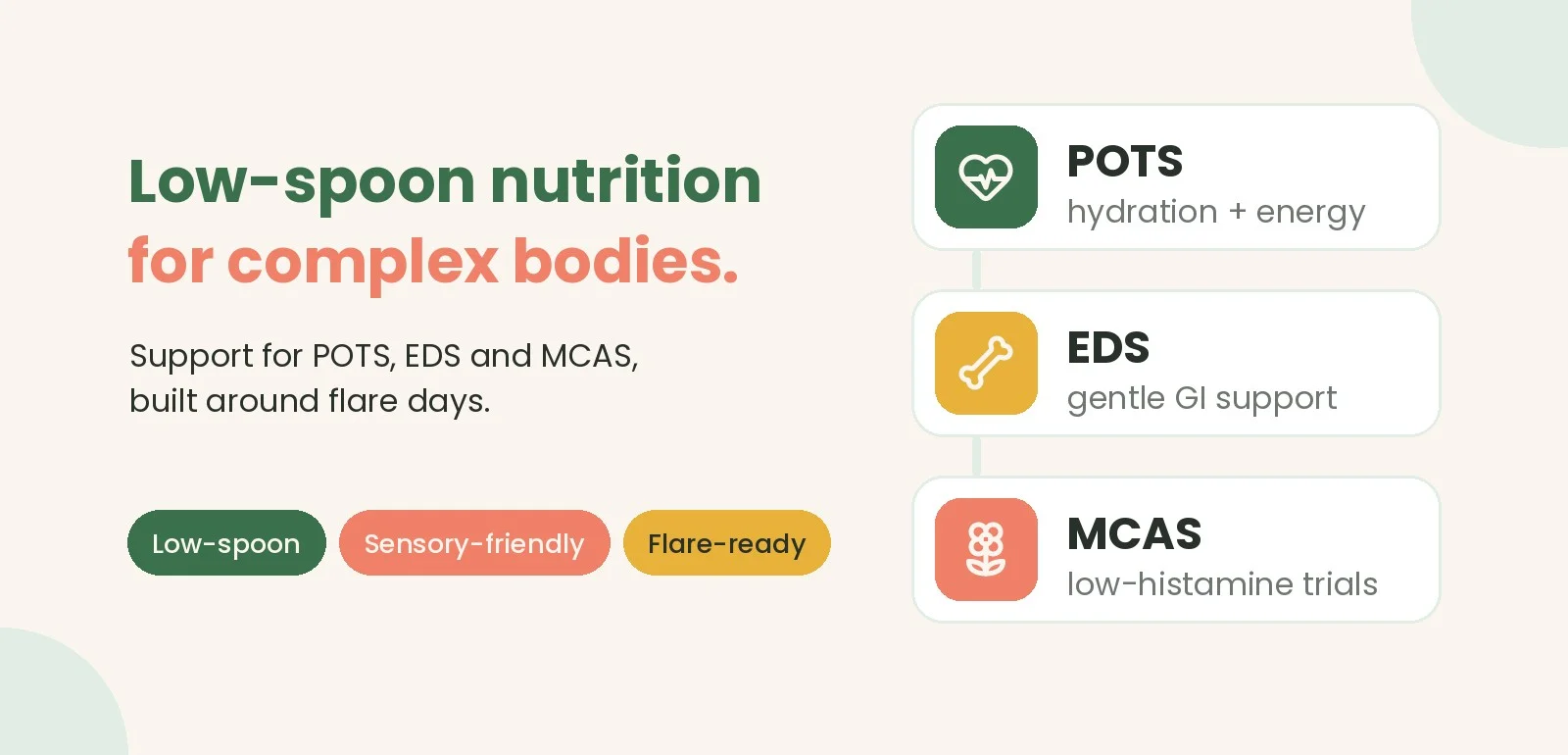
POTS: Support with fluids, electrolytes and small, frequent meals to help with dizziness, fatigue and energy crashes. We build a hydration routine that works on busy and low-spoon days. Start here: the best foods for POTS.
Ehlers-Danlos Syndrome (EDS): Support for the GI side of EDS, including gastroparesis, slow digestion and feeling full fast. We focus on gentle, easy-to-digest ways to meet your needs.
Learn more about GI and tube feeding support →
MCAS: Guided, short-term low-histamine trials to identify your personal triggers, without cutting out more foods than you need to. The goal is always the widest, safest food list possible.
Low-Spoon POTS and MCAS Nutrition That Fits Real Life
Fluids and electrolytes: Realistic hydration routines, with your care team's guidance, built into your day
Small, frequent meals: Easier on your body, gentler on symptoms and more doable on hard days
Low-histamine trials: Structured and temporary, so you learn your triggers without long-term restriction.
Gastroparesis support: Textures, meal timing and food choices that are easier to digest.
Tube feeding support: Guidance for enteral nutrition, including working alongside your medical team.
Low-spoon meals: Convenience foods used unapologetically. Pre-cut produce, frozen staples and easy proteins are tools, not failures.
Sensory-honoring choices: If only cold, smooth foods work on a high-pain day, we honor that.
A Plan That Flexes With Your Body
On flare days: When your body needs rest, your plan gets simpler. We lean on minimal-prep and no-cook options, small sips and bites that still count, and a ready-made backup plan, so you never have to make food decisions when you're running on empty.
On good days: When you have more energy, we use it gently. That might mean adding a little variety, trying a new food if you want to, or making easy batch options that carry you through harder days. No pressure to do it all, just small steps that make tomorrow easier.
Complex Bodies and Neurodivergent Brains
POTS, EDS and MCAS often show up together, and they're common among autistic and ADHD adults. As an autistic, ADHD dietitian, I understand how sensory needs, executive function and chronic symptoms can pile up. We build a plan for all of you, not just one diagnosis.
Learn about neurodivergent nutrition →
I Work Alongside Your Specialists
Complex conditions need a coordinated team. With your permission, I'm happy to work alongside your cardiologist, allergist, GI doctor, primary care provider and therapist, so your nutrition plan fits your full medical picture.
What Clients Say
"Kaitlyn is so very encouraging and patient with me while figuring out how to handle these new diagnoses and issues with my gut!"
Inmelda, Nourish Client
"Focused on finding a solution that is realistic for my lifestyle. Targeting from both a nutrition and lab results standpoint."
Nourish Client
"I love how Kaitlyn is able to support me with my health and nutrition goals, especially during extra challenging times."
Nourish Client
POTS, EDS & MCAS Dietitian FAQs
Is there a specific POTS diet?
There's no one-size-fits-all POTS diet. Most people benefit from fluids, electrolytes and small, frequent meals, tailored to your body and your care team's guidance.
Do I need to follow a low-histamine diet for MCAS?
Not necessarily. We will look for patterns in your eating, and if histamines appear to be a possible trigger, we take action. We use short, guided low-histamine trials to find your triggers, then bring foods back in so your diet stays as wide as possible.
Can you help with gastroparesis or tube feeding?
Yes. I support gastroparesis and enteral nutrition, and I'm happy to coordinate with your GI team.
Do I need a diagnosis to work with you?
No. If you're still seeking answers, we can work on symptoms now.
Is it covered by insurance?
Usually, yes. Most clients pay $0 with Aetna, BCBS, Cigna or UnitedHealthcare. There is no charge if your claim is denied. HSA/FSA eligible. See insurance details →
Nutrition That Works on Your Hardest Days, Too
Let's build a gentle, flexible plan for POTS, EDS and MCAS, from the comfort of home. Virtual sessions, at your pace.