Dietitian vs Nutritionist & Virtual Dietitian FAQ
What's the difference between a dietitian and a nutritionist? Answers on insurance, first sessions and neurodivergent-affirming virtual care in 27 states.

Dietitian FAQ: Your Questions, Answered
Getting Started
What's the difference between a dietitian and a nutritionist?
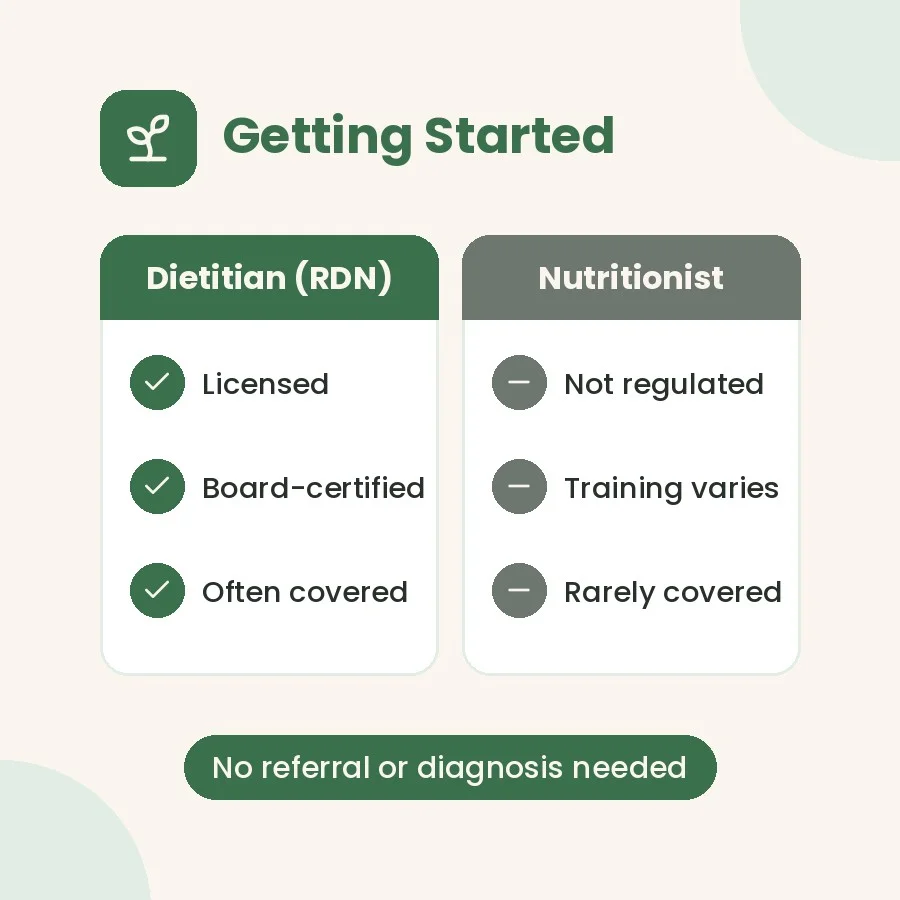
A registered dietitian (RDN) is a licensed, board-certified healthcare provider. "Nutritionist" isn't regulated in most states, so training varies.
What does a dietitian do?
I help you meet your nutrition needs with flexible routines built around your brain, body and real life.
Do dietitians actually help?
Yes, when the care fits you. Many of my clients have seen dietitians before and left with a plan that didn't work for their brain or body. I start with what you already eat and what gets in the way, then we build from there. Most clients notice eating feels less stressful within the first few sessions.
Do I need a referral from my doctor?
No. You can book directly.
Do I need a diagnosis to work with you?
No. If food feels hard, you're welcome here.
Who do you work with?
Adults (18+) who are neurodivergent, LGBTQIA+, in eating disorder or ARFID recovery, or living with POTS, EDS, MCAS or GI conditions.
Cost & Insurance
Is a dietitian covered by insurance?
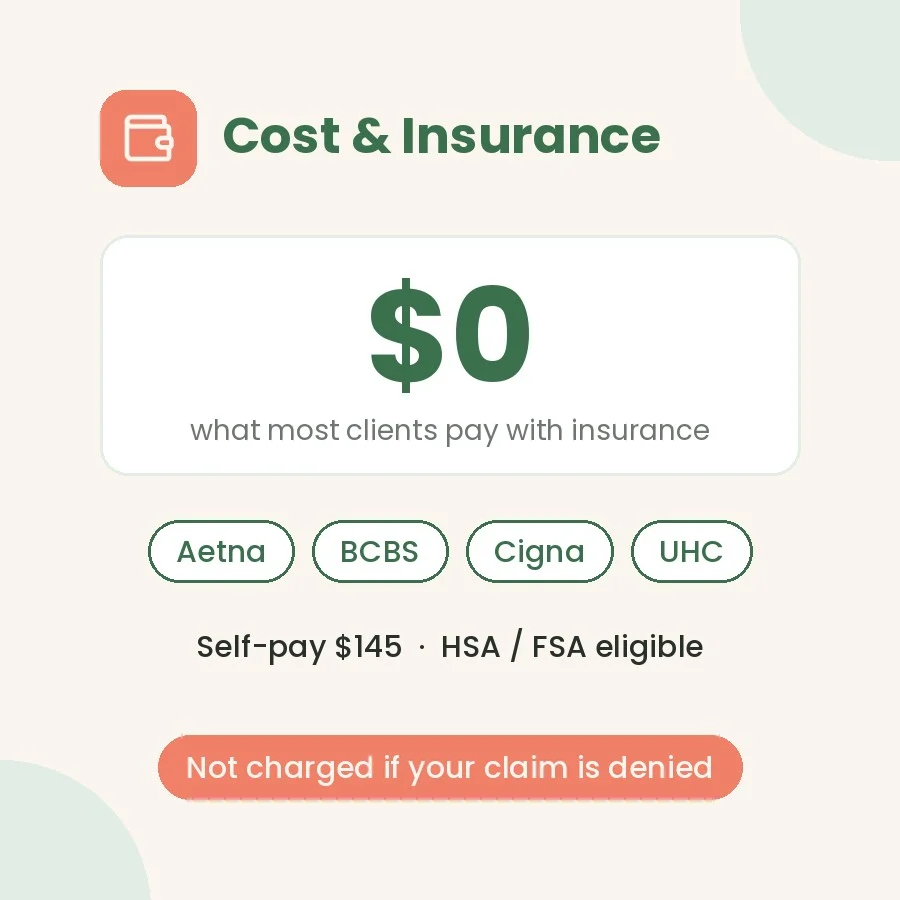
Usually, yes. Most clients pay $0 with Aetna, BCBS, Cigna or UnitedHealthcare.
What if my claim is denied?
You won't be charged. Copays or coinsurance may still apply.
Can I pay without insurance?
Yes. Sessions are $145, and HSA and FSA cards are accepted.
My Approach
Do you practice HAES and neuro-affirming care?
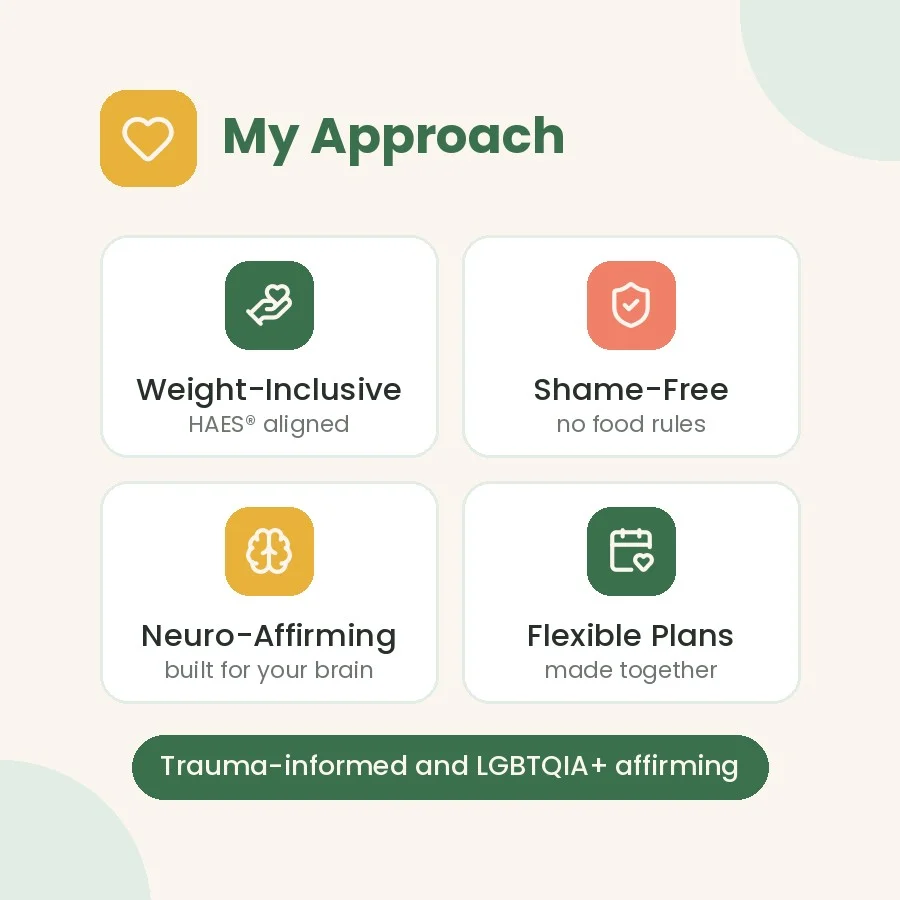
Yes. My care is weight-inclusive, shame-free, trauma-informed and LGBTQIA+ affirming.
Will you give me a meal plan?
If it helps, we'll build a flexible one together in session.
Will you weigh me or focus on weight loss?
No. We focus on energy, how you feel and your relationship with food.
Specialties
Can a dietitian help with ADHD or autism?
Yes. I help with forgetting to eat, sensory needs, safe foods and decision fatigue. Read more: why ADHD brains forget to eat.
Are you an ARFID dietitian for adults?
Do you help with POTS, EDS and MCAS?
Yes. I'm one of the few dietitians who specializes in all three.
Are you a GI dietitian for gastroparesis, IBS and SIBO?
Are you LGBTQIA+ affirming?
Yes. I'm a lesbian, neurodivergent dietitian (they/she), and my care is trans-inclusive.

Sessions & Logistics
How do I prepare for my first session with a dietitian?
You don't need to prepare anything. No food log, no weighing yourself and no homework. If it helps, jot down what feels hardest about food right now and any diagnoses or medications you'd like me to know about. Join from wherever you're comfortable.
What happens in the first session?
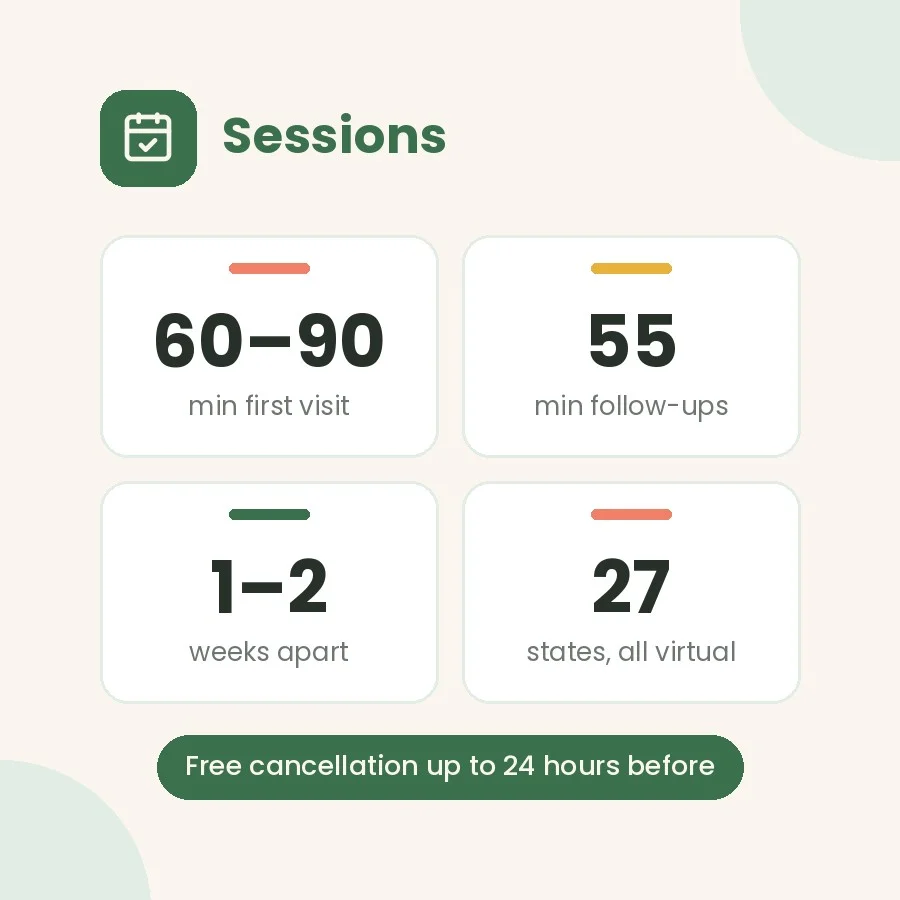
We spend 60 to 90 minutes getting to know you, and you leave with three doable next steps.
How often will we meet?
Every 1 to 2 weeks to start, then less often as you feel ready.
What states do you serve?
27 states: Alabama, Arizona, California, Colorado, Connecticut, Florida, Georgia, Hawaii, Idaho, Illinois, Indiana, Massachusetts, Michigan, New Hampshire, New Jersey, New York, Oklahoma, Oregon, Pennsylvania, Texas, Utah, Vermont, Virginia, Washington, West Virginia, Wisconsin and Wyoming.
What's your cancellation policy?
Free up to 24 hours before. Later cancellations or no-shows may have a $75 fee.
How do I book?
Click "Check Availability & Coverage," pick a time, then add your insurance.
Still Have Questions? Let's Talk.
Book a free Fit Call to ask me anything, or check your availability and coverage in just a few minutes. Most clients pay $0.
Please Note
Insurance coverage varies by plan. Your coverage is confirmed when you book through Nourish, and you won't be charged if your claim is denied.
Nutrition counseling is not a substitute for emergency care. In crisis? Call or text 988, any time.
Last updated: September 2026